This type of industrial building usually falls into the hands of engineering firms, which tend to opt for more predictable solutions. Projects like this are rarely entrusted to creative architecture studios such as OOIIO. A quick walk through any industrial park reveals how little attention is generally paid to architecture in these buildings—to conveying emotion through materials, form, and light. That is why this project is a singular case, a rare bird in the world of mechanical workshops.
As Le Corbusier once said, a (industrial) building can be like a car, where everything must be in its place—a machine for living. A car must function perfectly; efficiency and function take priority. At the same time, it must also move us, transmitting a wide range of sensations. Driving a sports car is not the same as driving a van, even though both take you from point A to point B. Car brands understand this very well and skillfully work with the emotions their brands convey. For this reason, in this case the decision was made to move beyond the expected and create a different kind of building.
The first major decision of the project was to recycle the pre-existing industrial structure and adapt it to new uses. This approach is far more sustainable than demolishing it and constructing something entirely new—an option that would have made the construction process easier and faster but would have generated tons of unnecessary waste. Can a former kitchen factory become a building for car sales and workshops? Of course, it can.
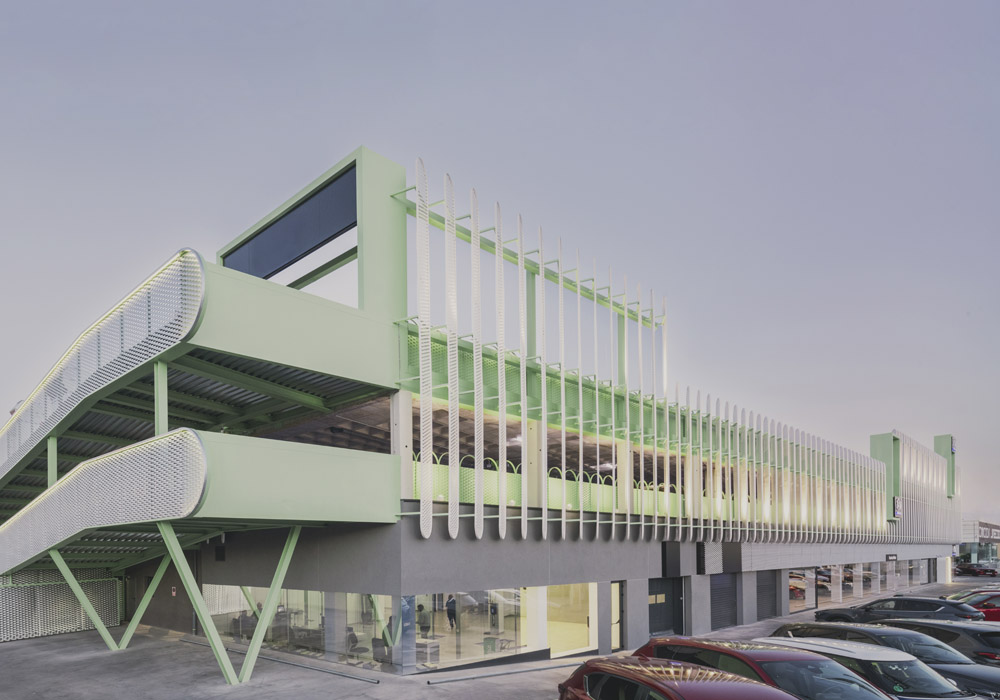
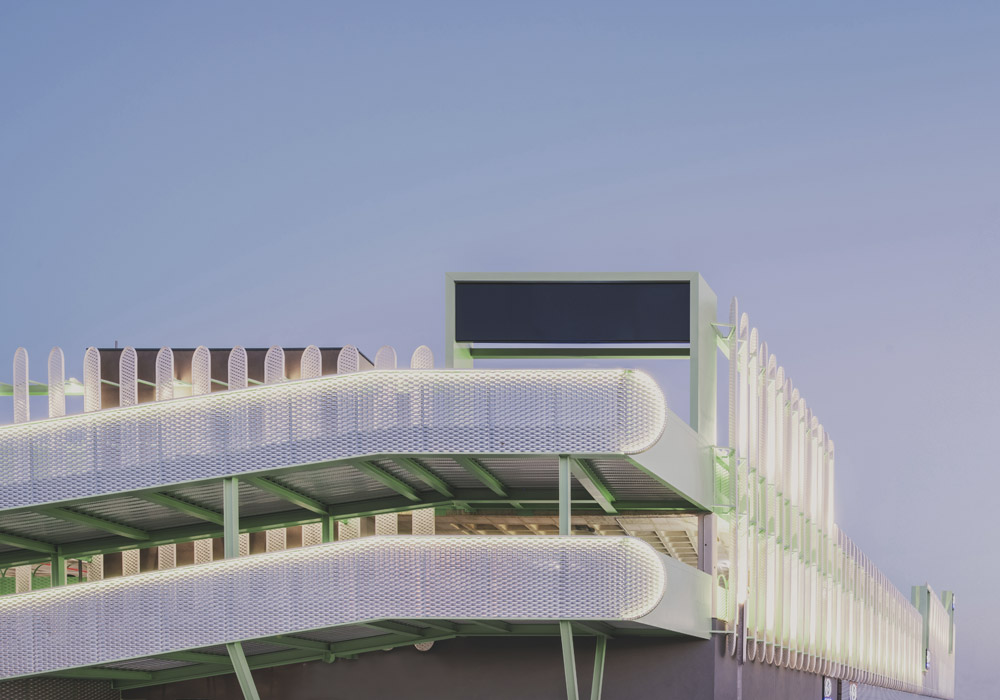
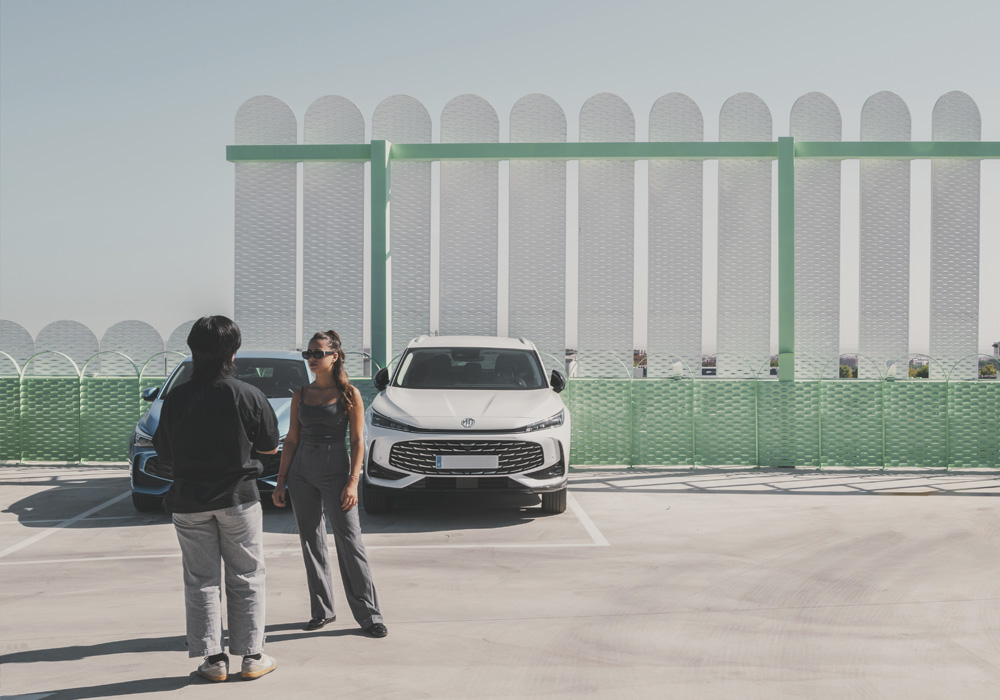
For purely functional reasons, the ground floor was adapted as a commercial space and workshops for mechanical and body repairs, while the two upper floors were designated for car storage. This required reinforcing the entire structure of the old building to support the substantial new loads. In addition, the former roof was removed and transformed into an additional level for car storage, now protected from the sun by photovoltaic pergolas capable of generating enough electricity not only to meet this building’s needs but also those of the surrounding buildings.
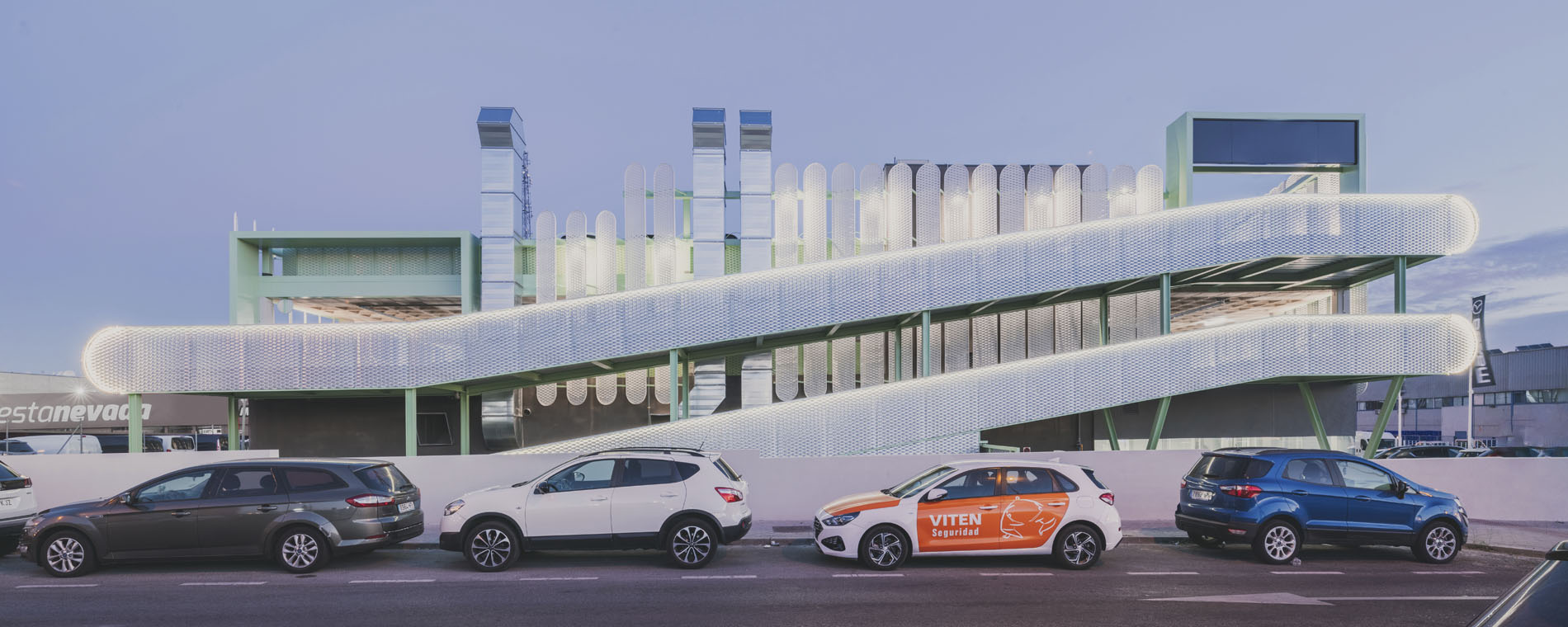
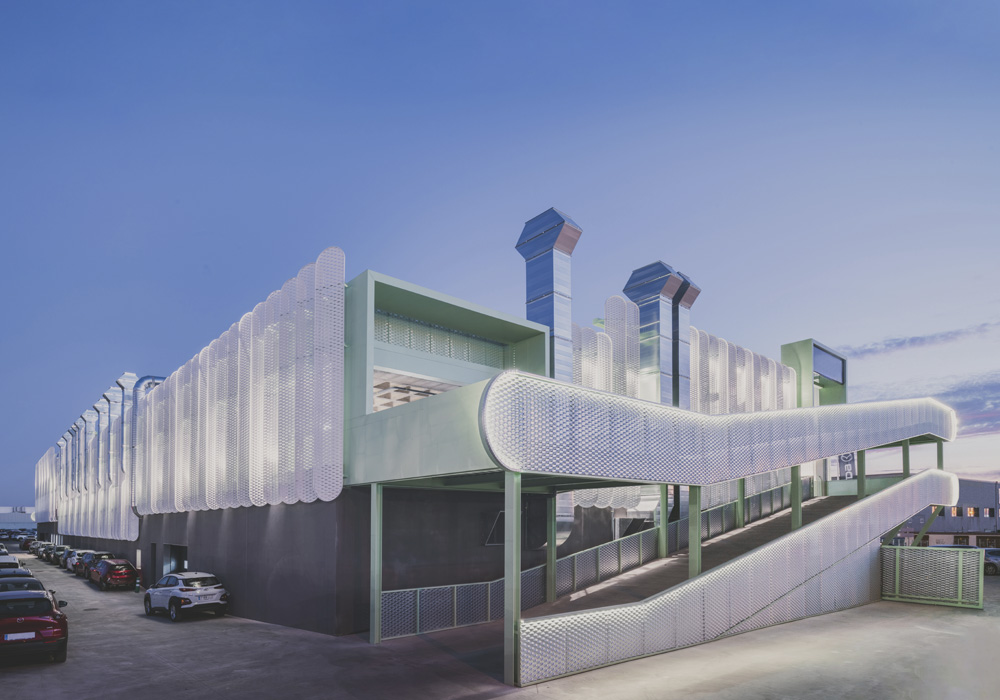
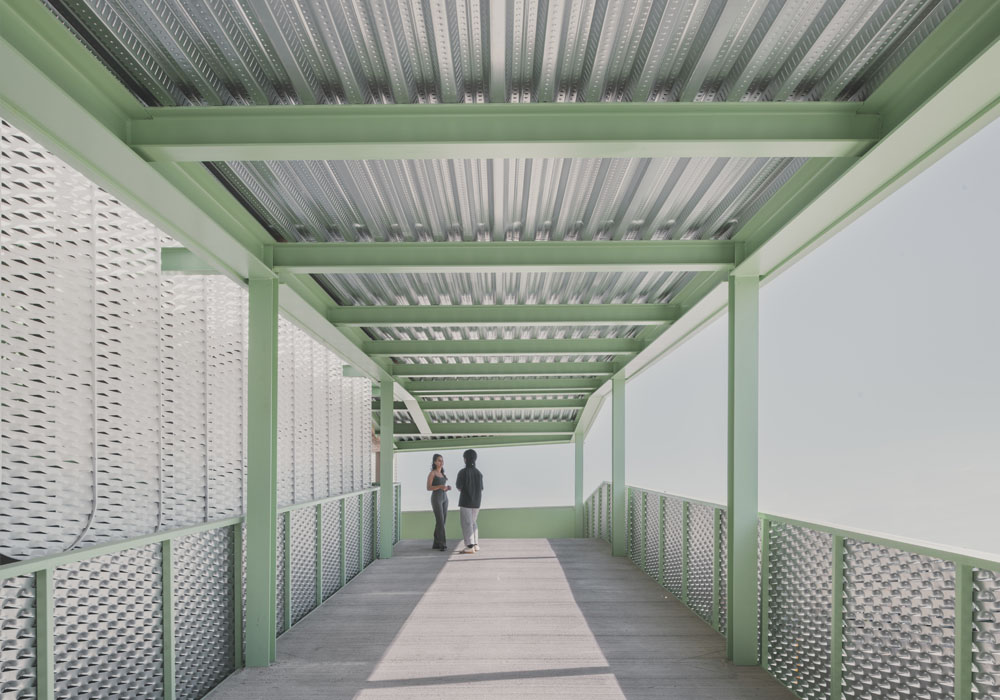
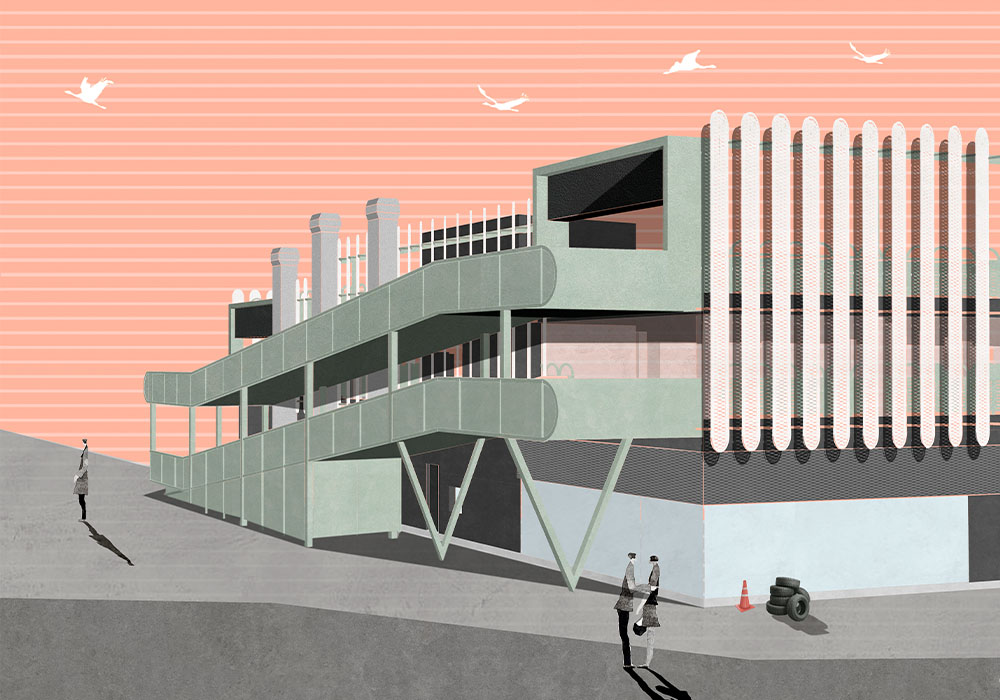
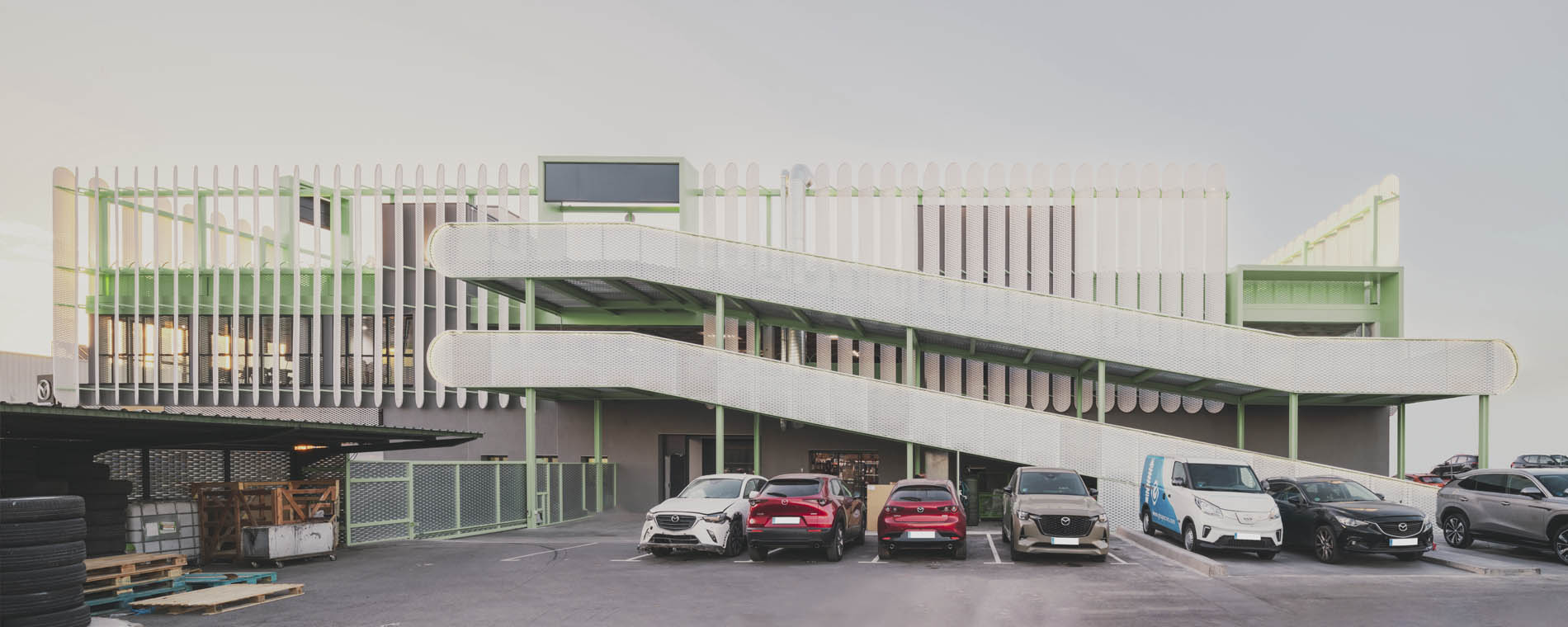
Two large circulation ramps were created on the sides of the building, coexisting with the routes of customer vehicles moving through the workshops and showroom on the ground floor. By adding office space on the first floor, the building’s program requirements were fully resolved.
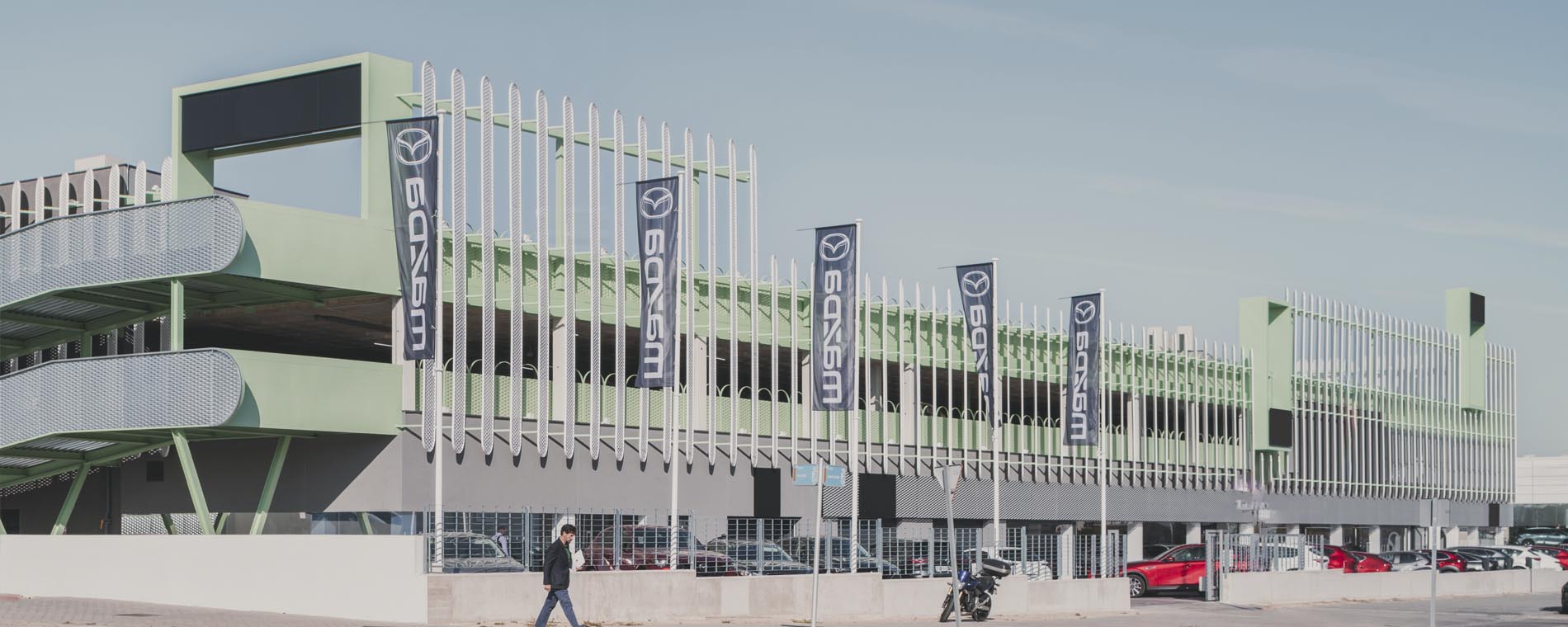
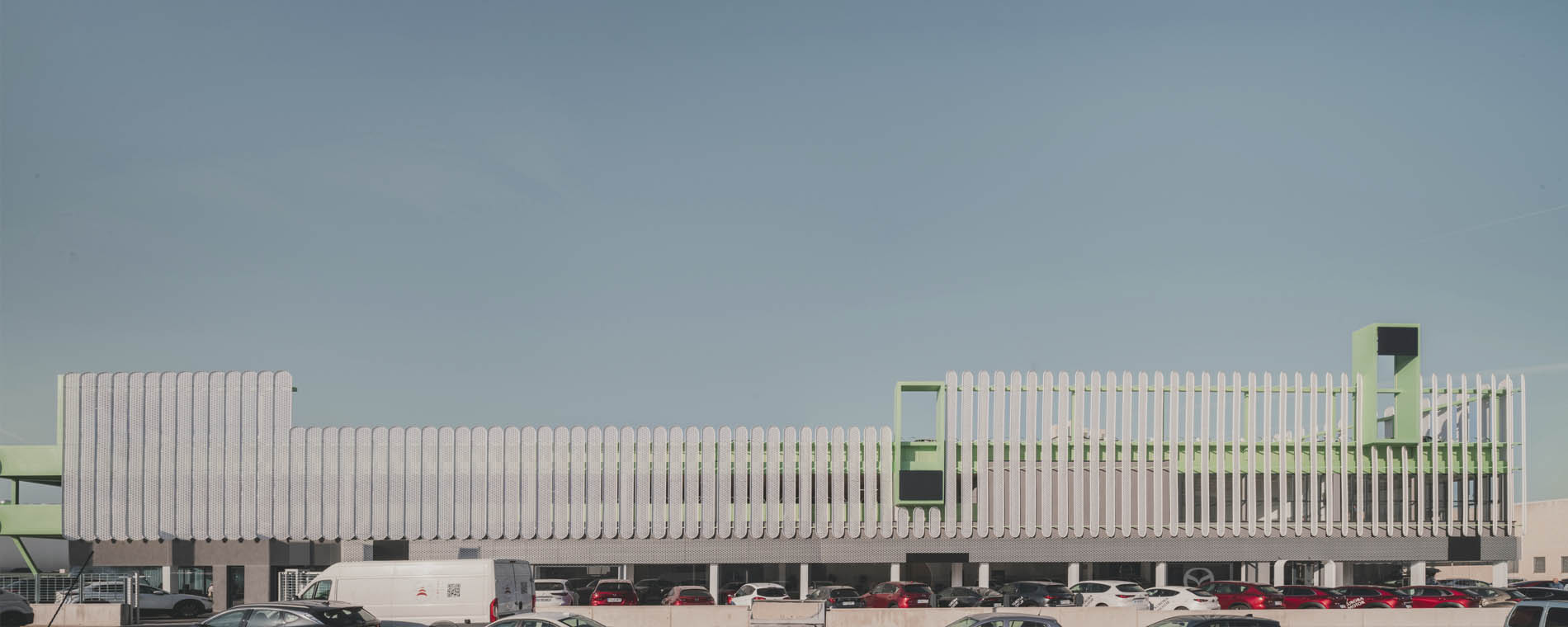
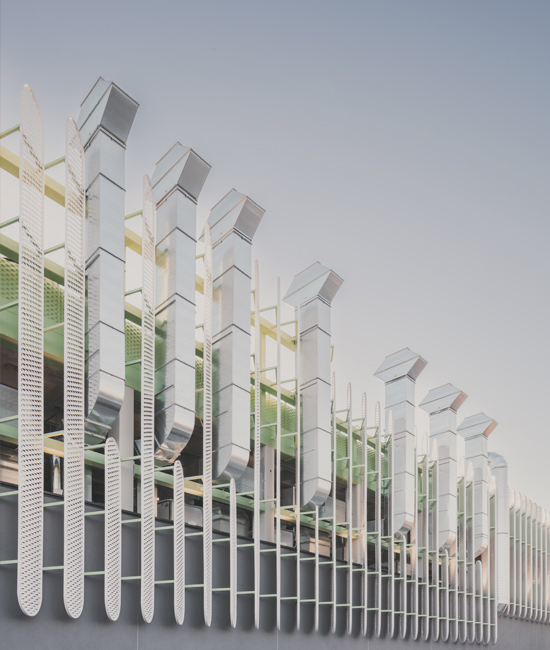
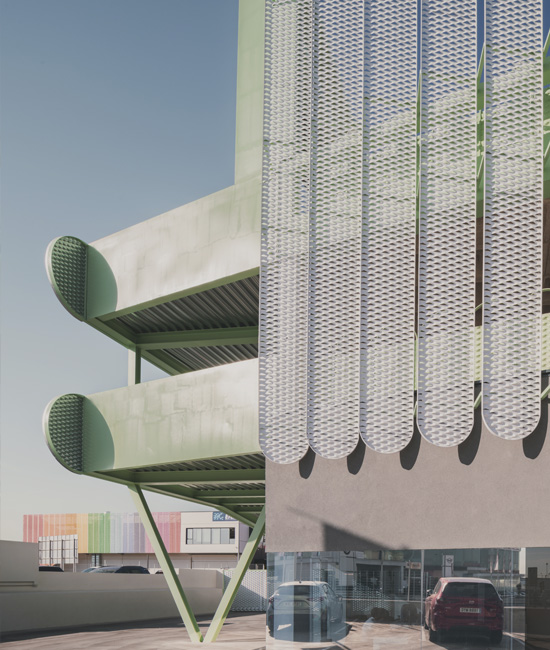
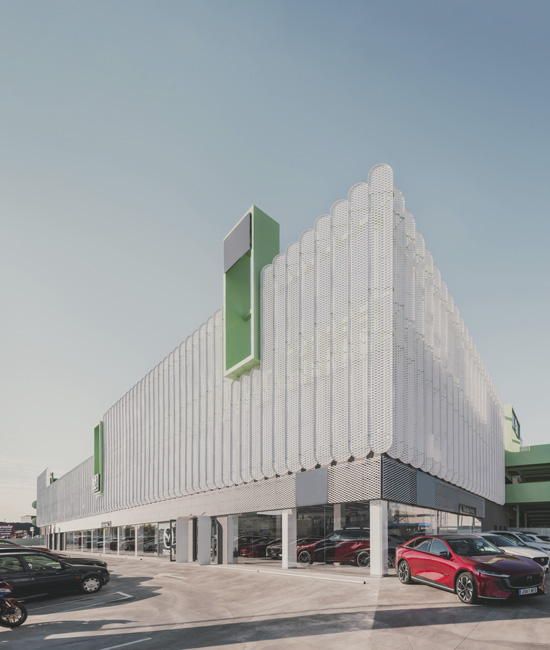
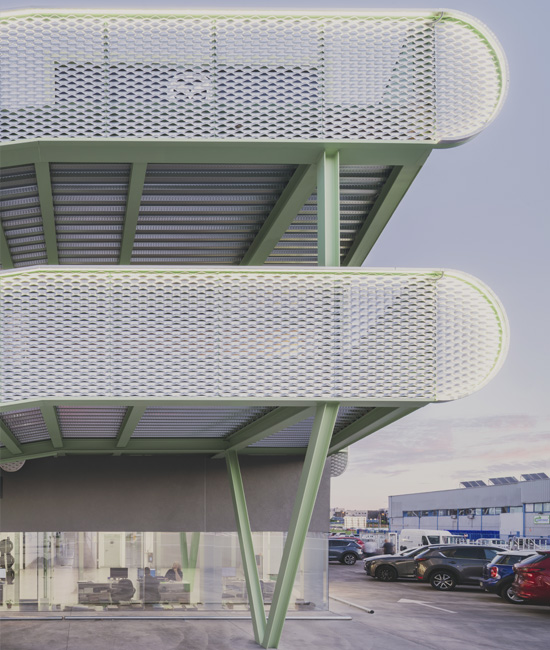
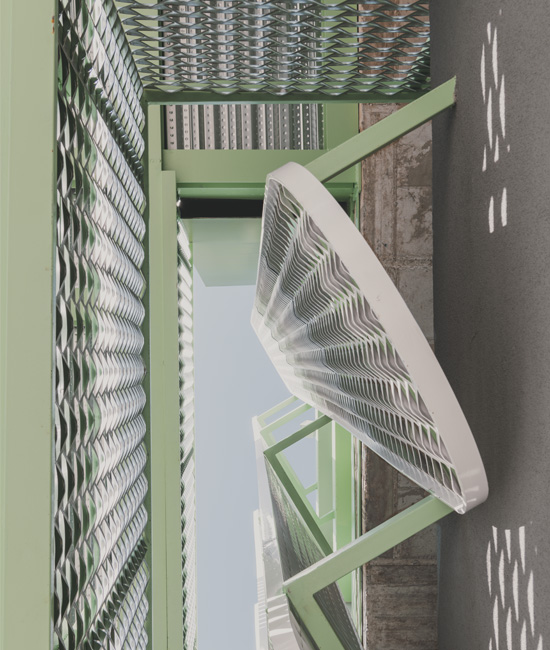
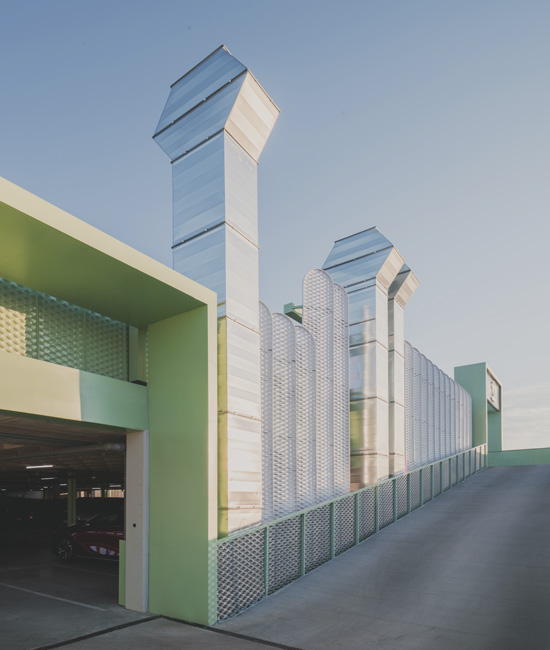
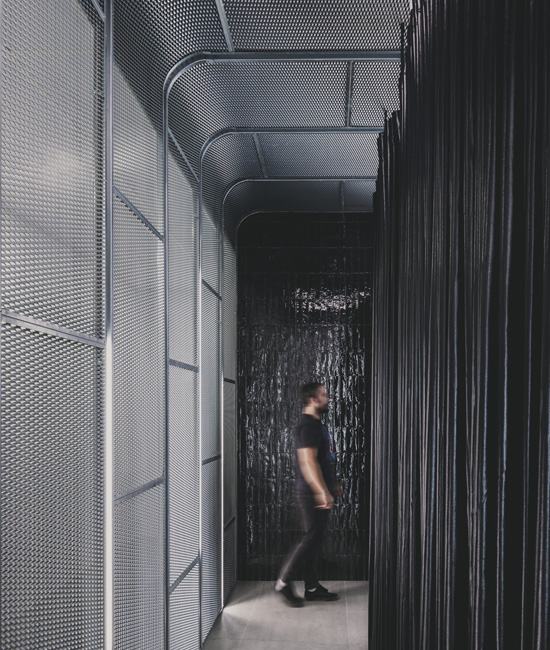
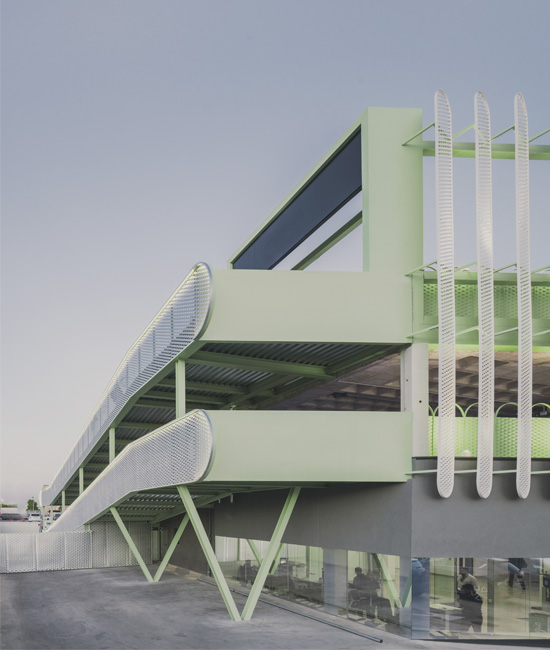
The former kitchen factory had a heavy, closed brick façade, with a kind of corner turret clad in granite panels. It lacked insulation and went largely unnoticed.
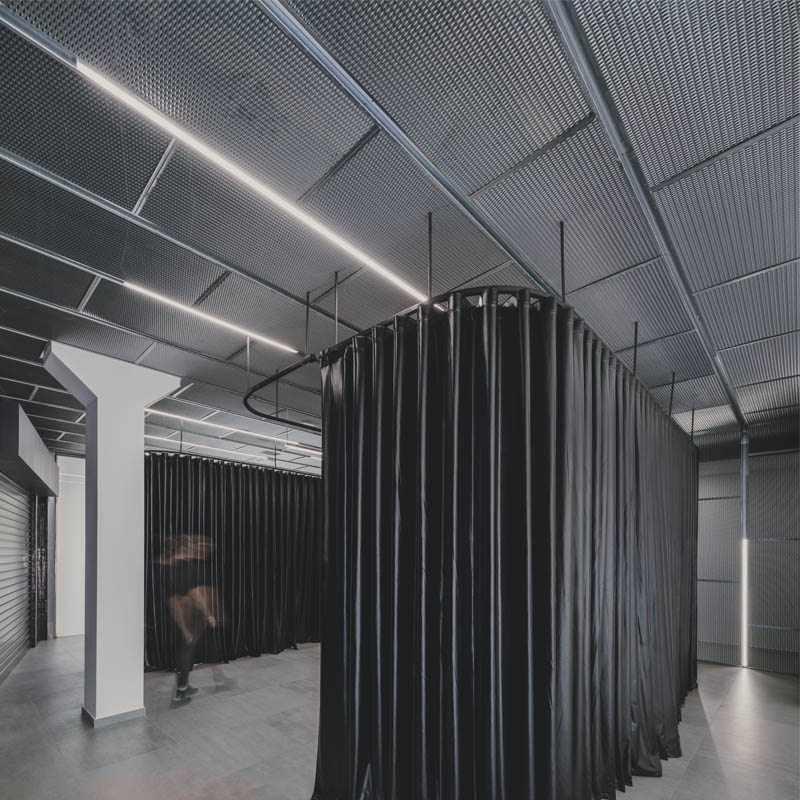
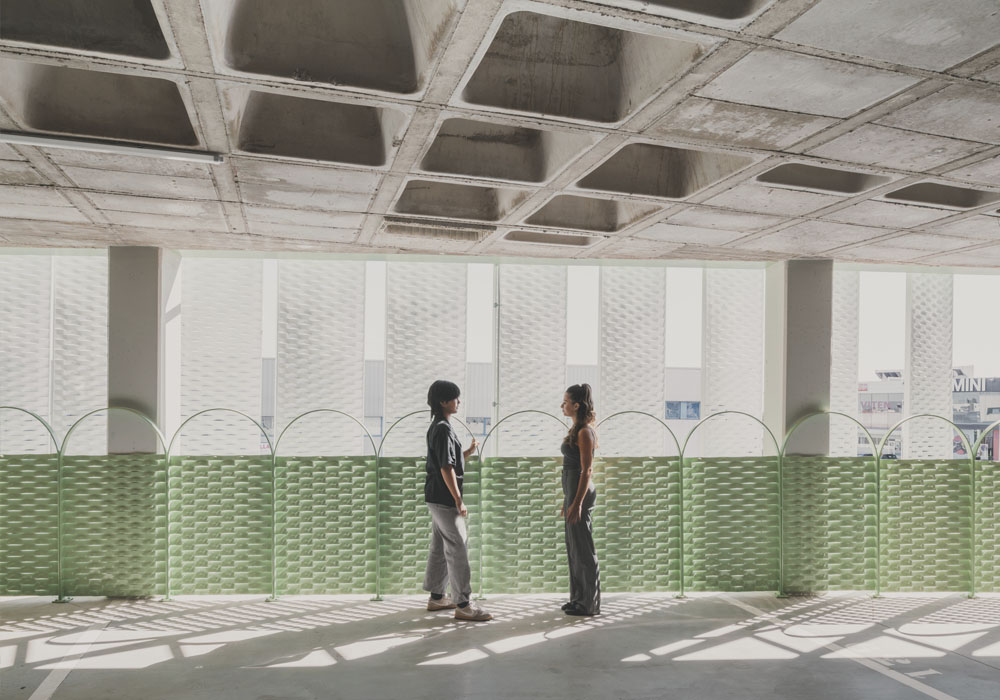
The design completely redefined the building’s relationship between interior and exterior by opening it up to its surroundings. The upper storage levels are not climate-controlled and remain open to the outside; energy is invested only in heating and cooling the ground floor, where workers and customers are located.
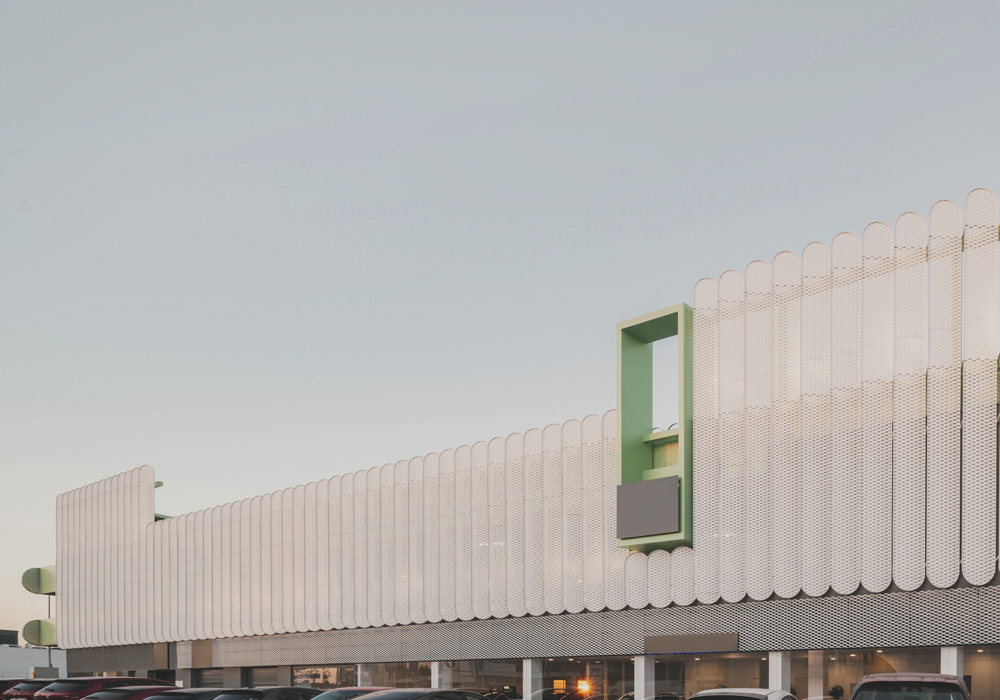
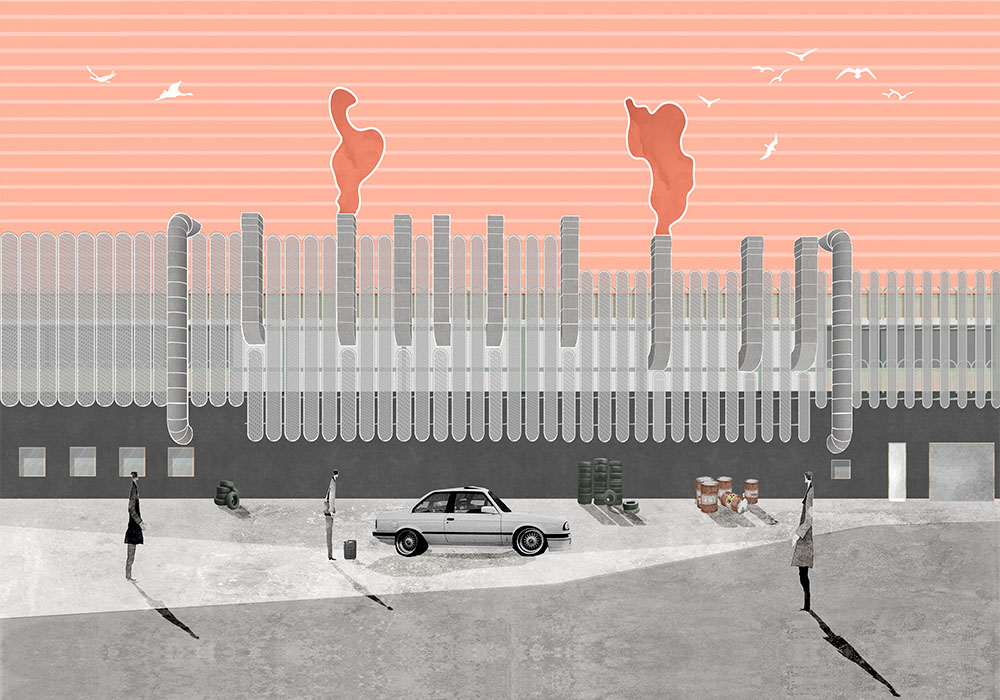
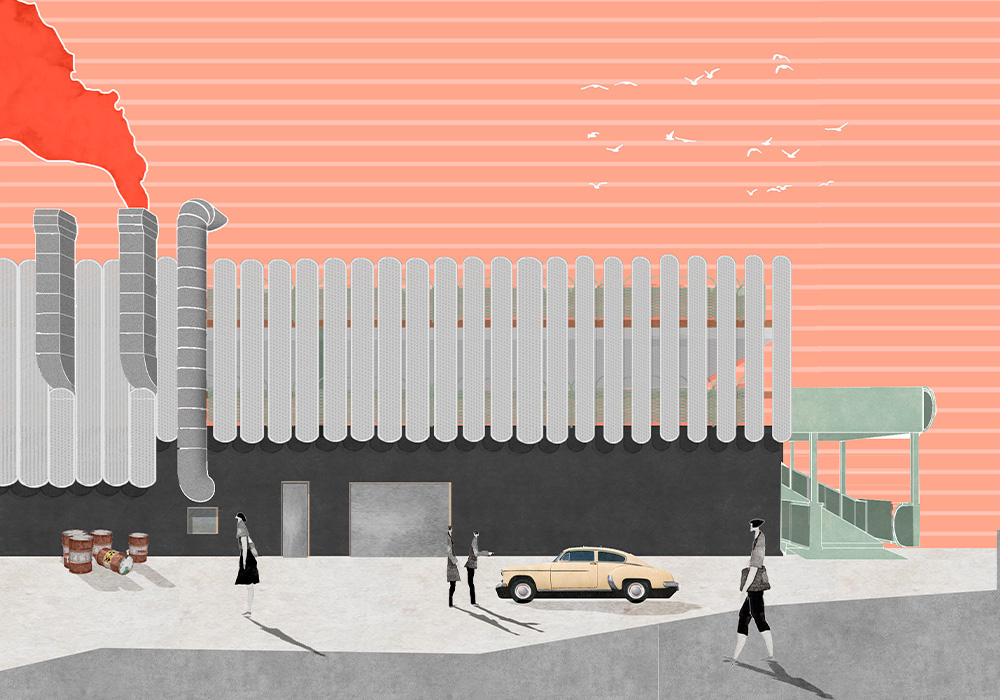
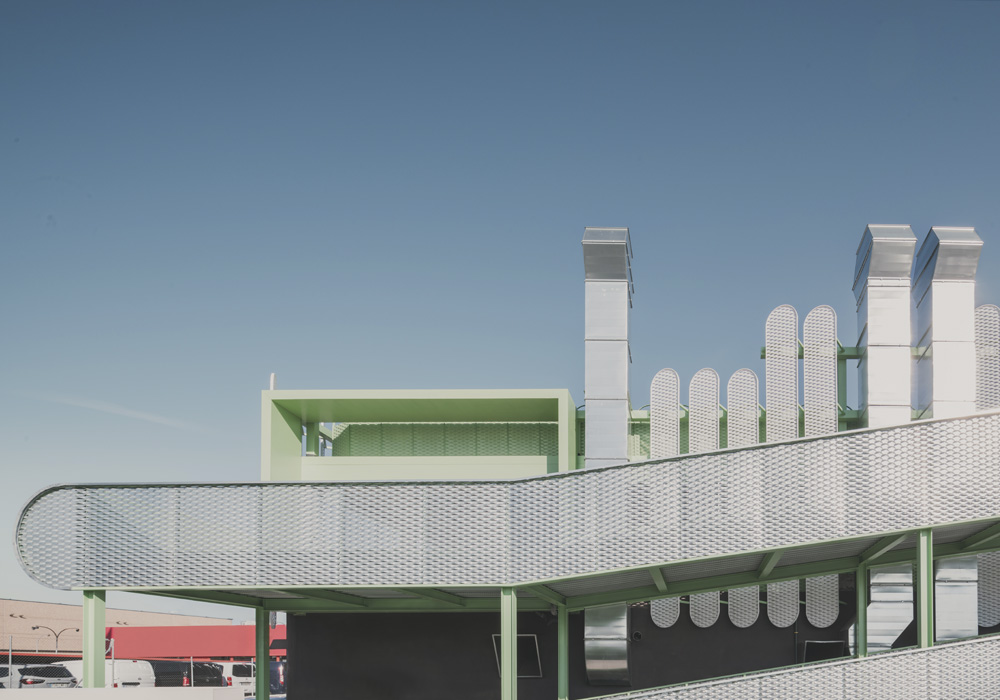
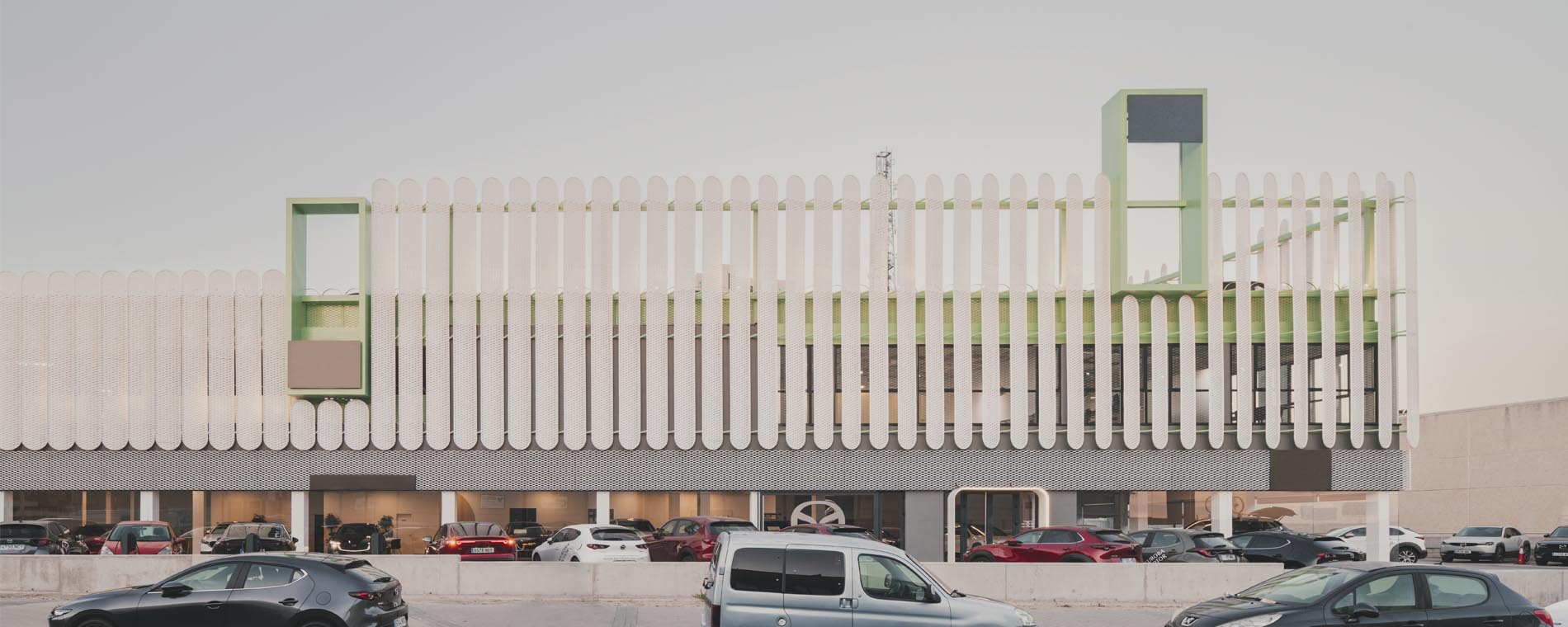
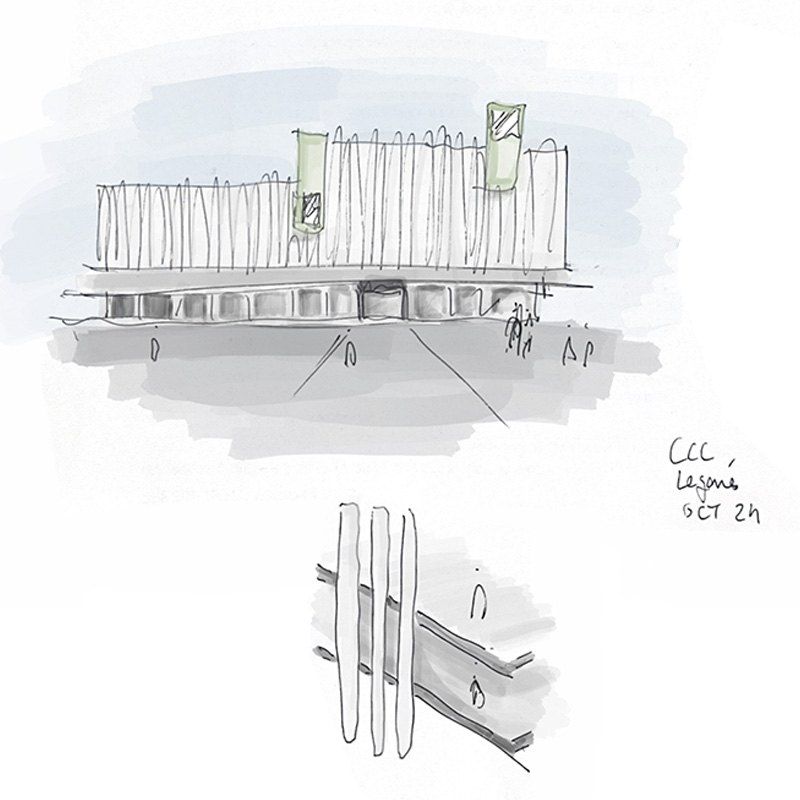
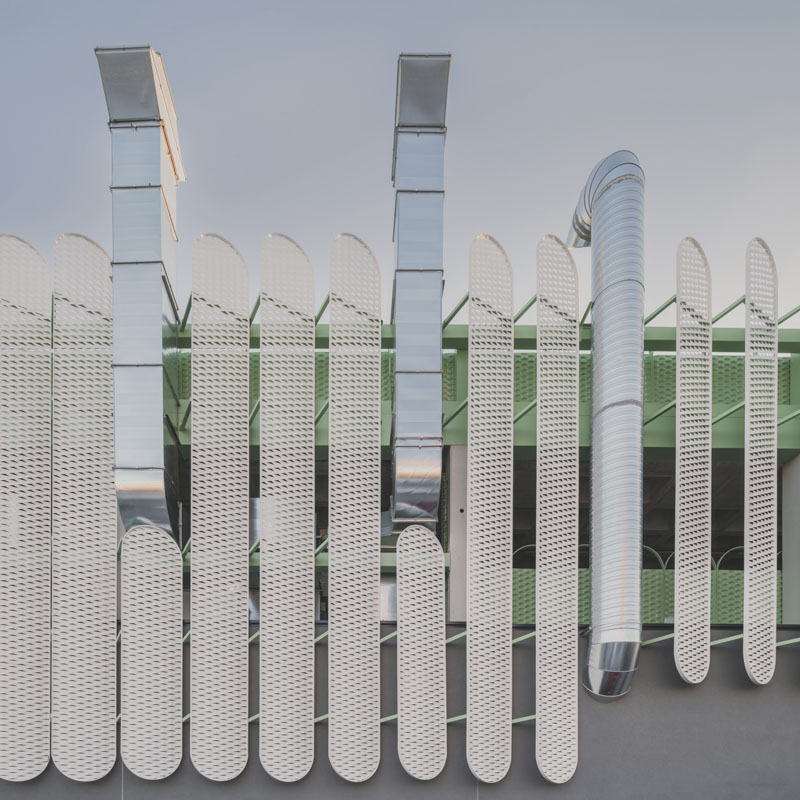
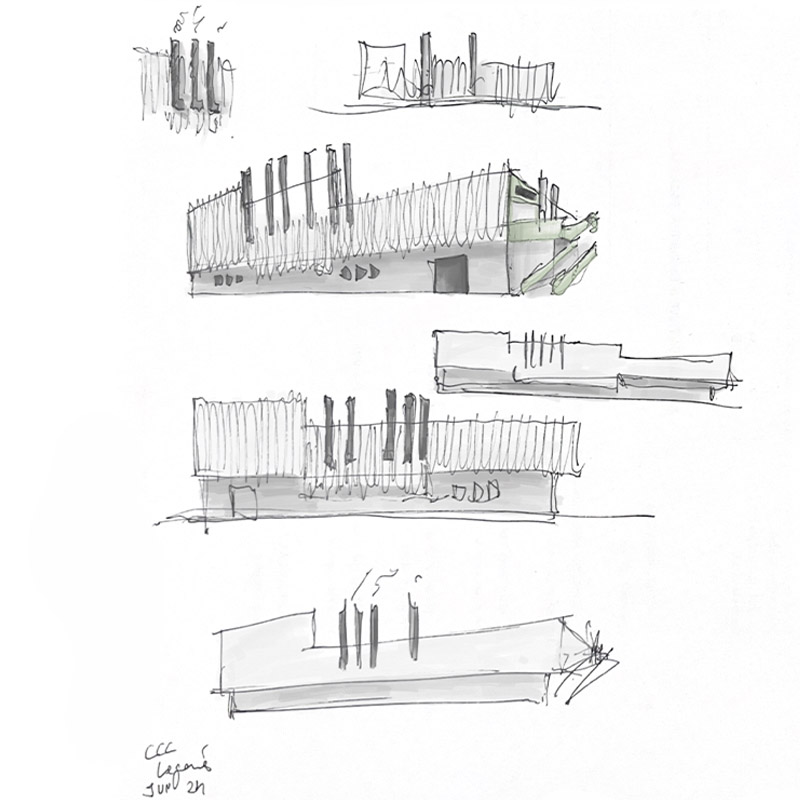
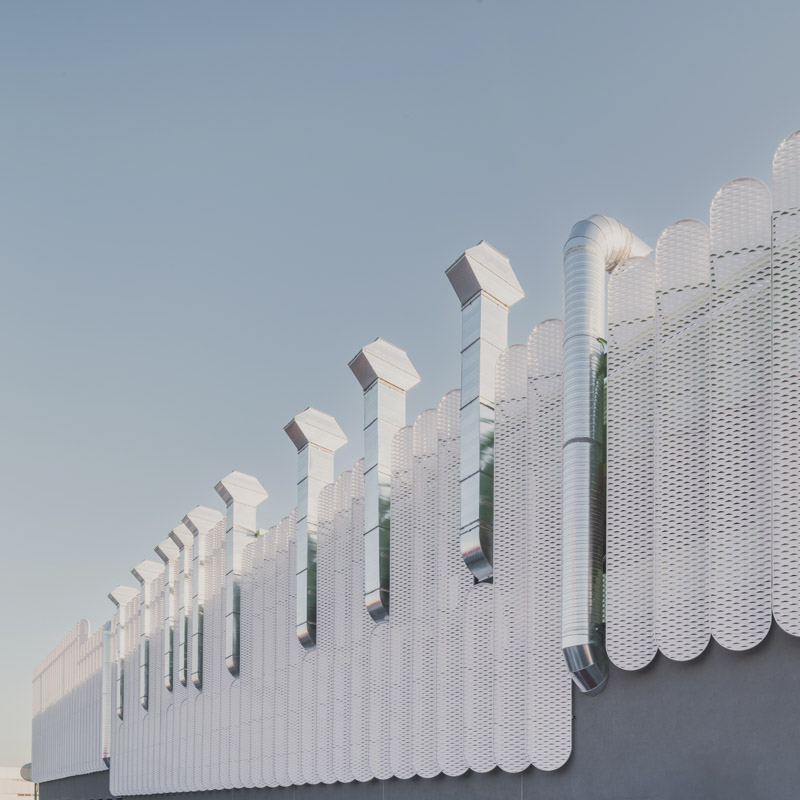
Large white metal slats of varying sizes, anchored to a mint-green substructure and strategically arranged around the entire perimeter of the building, are combined with chimneys and ventilation ducts required for the industrial machinery operating on the ground floor. By bringing these technical installations to the façade, the project exposes and monumentalizes the building’s industrial character while freeing up floor space to allow vehicles to circulate without obstruction.
The façade—through its combination of solar-control slats and industrial chimneys—becomes the building’s distinguishing element. It presents itself as a large container for vehicles, surprising with its details, textures, formal compositions, and play of color amid the monotony of the industrial park.
The slats recall the vertical flags of car dealerships that attract buyers’ attention. They give personality and character to the building while simultaneously reducing its energy consumption passively, without expending additional energy. Standing on the upper floors during the hot Madrid summer, the interior remains several degrees cooler; there is no oppressive heat. Cross ventilation flows through the façade and refreshes the environment without spending a single euro on mechanical cooling.
Passive solar control, energy self-sufficiency, rainwater harvesting for reuse in car washing, recycling and adaptation of existing structures, design and a distinct identity… Another kind of industrial building is possible!
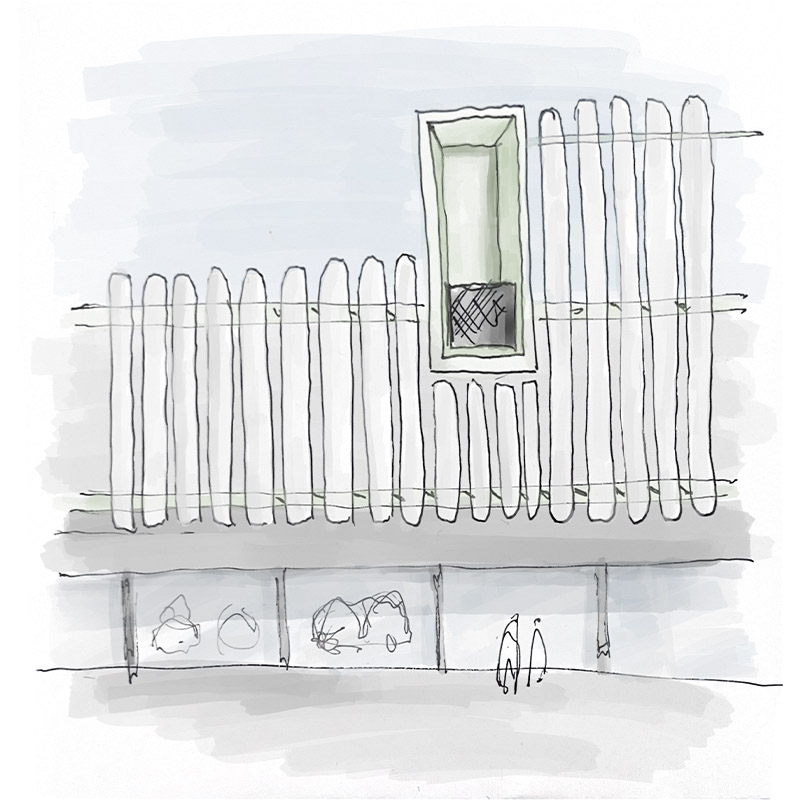
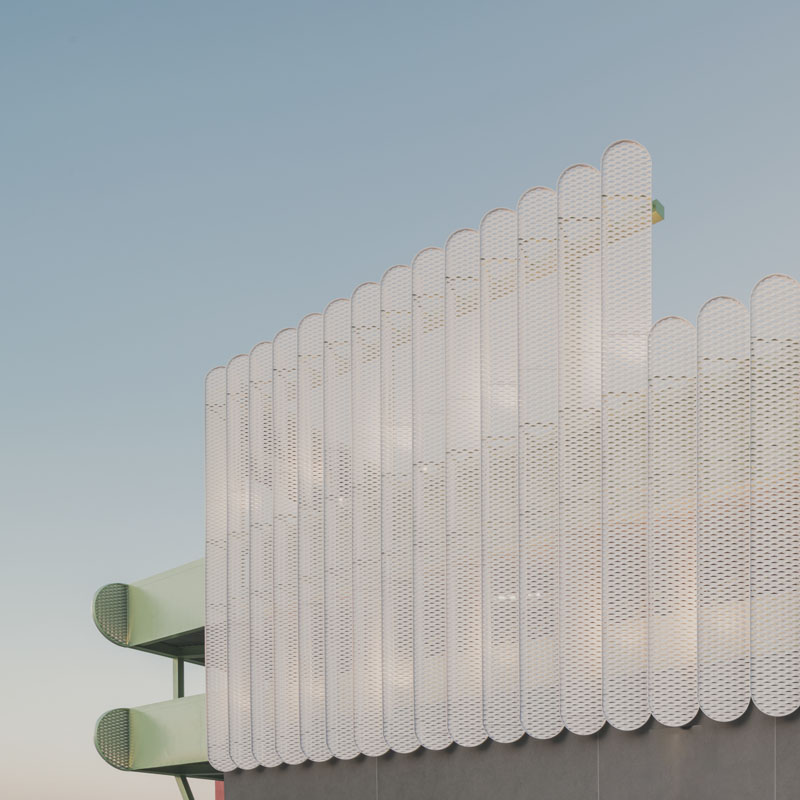
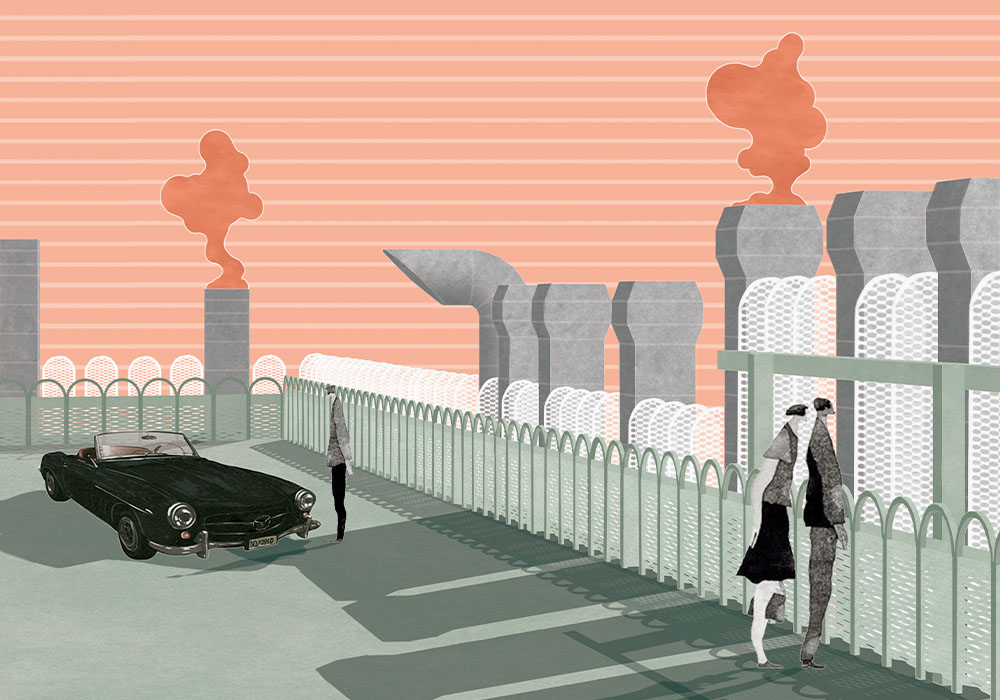
Collage del Proyecto